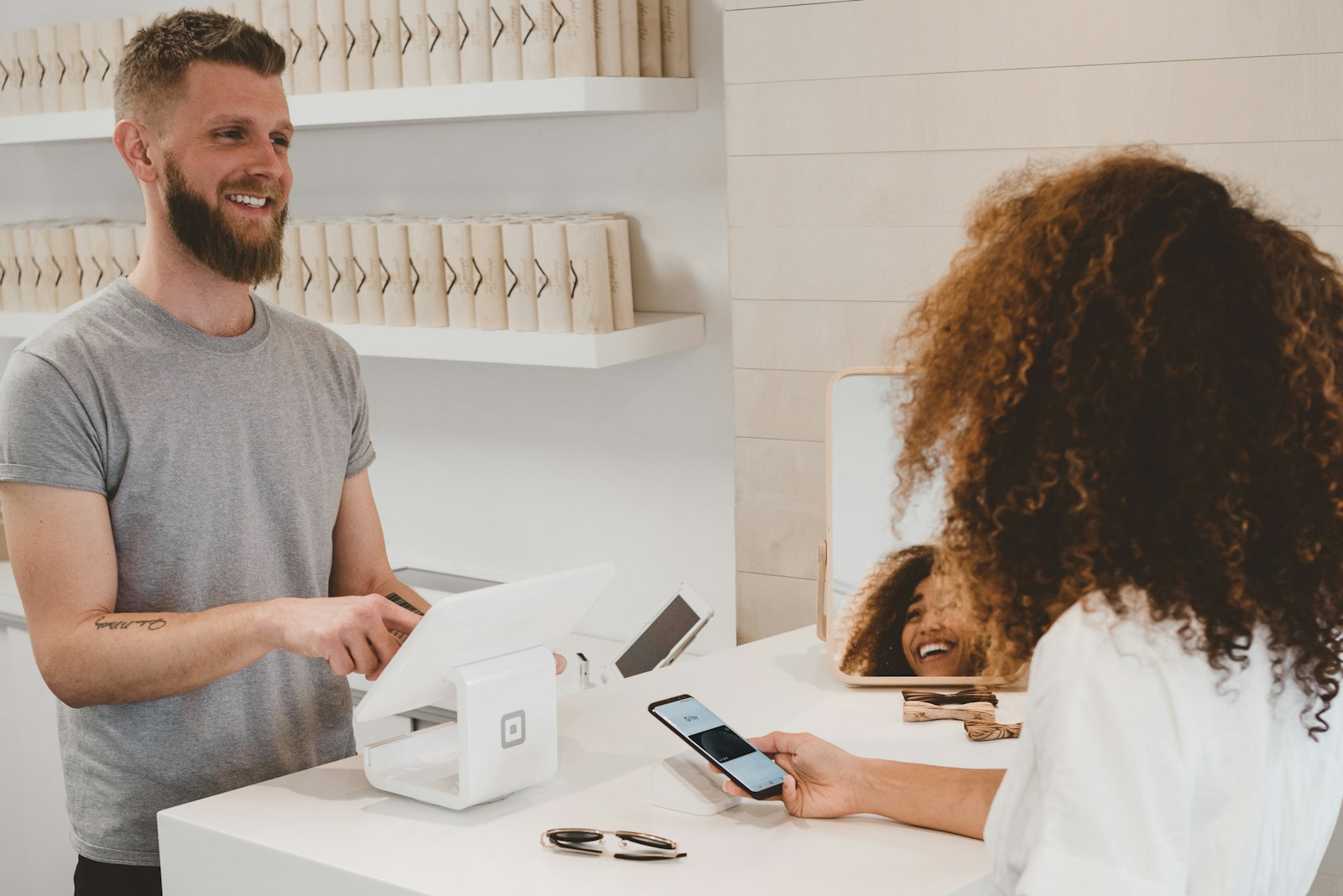
Priya finishes a product design project for a client in New York at 11pm on a Thursday in Lisbon. She sends the final files, submits the invoice, and closes her laptop. By the time she opens it the next morning, the payment has arrived — not waiting in a queue, not pending a business-day clearance, not sitting in a limbo between a US bank account and a Portuguese one. It is in her wallet.
This is the detail that people who have been paid across borders for years tend to notice first: not the monthly fee comparison, not the exchange rate on the day, but the simple fact that the money was there when they expected it to be. That reliability is rarer than it should be, and it is the thing that changes most when a payment network is built correctly.
The old way: three countries, three apps, three sets of waiting
For most of the past decade, Priya's financial life looked like most remote workers' financial lives: held together by a combination of apps, workarounds, and accepted inconveniences.
Her US clients paid into a Wise account because wire transfers to her Portuguese account took too long and cost too much. Her Portuguese day-to-day spending came from a local account she opened when she moved, which required six weeks and a shelf of documents she had to have apostilled. Her monthly send to her parents in Chennai — a fixed amount, every month, like clockwork — went through a different service still, because the EUR-to-INR corridor wasn't well-served by the app she used for everything else.
Three countries in her daily financial life. Three products to manage them. Three separate experiences of the same basic action: moving money between two people who trust each other.
One wallet, three currencies
The Spondula wallet holds all three. USD-S from her New York clients. EUR-S for her Lisbon life. And when she wants to send home to Chennai, the network handles the corridor without requiring a fourth app, a fourth set of credentials, or a fourth round of explaining to a compliance form why she is a person who lives and works across borders.
Her Shandle — Spriya — is the same one she gives to every client, regardless of where they are. She shared it once when she started using the network. It sits in her email signature. It requires no updating when she moves apartments, changes her phone, or one day moves cities again. The clients who have paid her once have her handle already; the next invoice doesn't need payment instructions attached.
The multi-currency hold is the part remote workers tend to underestimate until they use it. A person who earns in USD, lives in EUR, and sends in GBP or INR has, in the traditional system, an FX conversion problem at every step. Move USD to EUR for rent — pay a margin. Move EUR to INR for the family send — pay another margin. Hold USD in a EUR account while deciding — accept the implicit currency risk. The Spondula wallet holds each token separately. A 500 USD-S balance is 500 USD-S until Priya decides otherwise — not converted automatically at someone else's spread.
The handle that doesn't change when you move
Remote workers move. That is part of the model. Priya was in Bangalore before Lisbon. Before that, a year in Berlin. She may be somewhere else entirely in two years. Each move, under the old system, generated a new round of "please update my payment details" messages sent to every client with any outstanding or future work.
An Shandle does not change with a postal address. It is attached to an account, not a location. Spriya is Spriya in Lisbon, in Berlin, in Bangalore, or in a flat in Medellín. Any client who has paid her before can pay her again without asking for anything new. Any new client who wants to pay her gets the same handle she will still be using years from now.
There is a compounding effect here that matters over time. Each new client who saves an Shandle in their contacts is a client who can pay instantly in future, without invoicing friction, without waiting for bank account details, without a payment instruction that has to be matched to a specific account that may have changed. The handle makes the relationship itself more fluid — which, for a freelancer or remote worker, is where most of the real inconvenience sits.
Saving a portion, earning as you go
For Priya, the part of the wallet she uses least is also the part that surprises her most. A portion of her balance sits in GOLD-S — not as an investment, but as the part of her savings that does not need to be in euros or dollars for the next six months. She moved it there once, and it has stayed there: a quiet layer of the wallet that holds value without being tied to any one currency's movements.
And over time, as she has referred colleagues and contacts to the network, a small BTC-S balance has accumulated — earned through real activity on the network as the people she referred have started transacting. Not free money, not a yield product. Just the network's way of acknowledging that some of its growth came from her.
Neither of those layers is why she uses Spondula. She uses it because the invoice she submits on a Thursday night is in her wallet by Friday morning. The other layers are part of a wallet that was worth keeping open — and that is a different thing from a product people use once and then look for a reason to replace.
The bigger picture
Priya is not an edge case. The shift to remote and distributed work over the past decade has created a generation of workers whose financial lives span multiple countries as a matter of course — not as a one-off relocation, but as a sustained and sometimes shifting pattern of earning in one place, living in another, and sending to a third. The traditional financial system was built for none of them.
A worker who is physically present in a country for tax purposes but earning from clients in other countries has a cross-border payment problem not once but constantly. Every invoice, every monthly family send, every landlord payment that happens to cross a currency boundary is a moment where the traditional system adds friction that was never necessary.
The wallet that solves this is not a wallet built for expats or high-net-worth internationally mobile workers. It is a wallet built for anyone — and the remote worker is simply the case where the "anywhere, anytime" design becomes obviously necessary rather than occasionally useful.
One wallet. One S-handle. Earnings in USD-S, spending in EUR-S, family support across the network — without a new app for each step.
— Spondula, built for how money actually moves
The remote worker's financial life crosses borders by design. The wallet should too.
Spondula is still pre-launch. If your work spans more countries than the traditional system was built to handle, the waitlist is the way in. Early users shape how the product develops — including which corridors open first and how the multi-currency wallet evolves.
Frequently asked questions
Can I give clients my S-handle instead of bank account details?
Yes. Your Shandle is how clients pay you on the Spondula network. You share it once — in an email signature, on an invoice, in a project brief — and it works for every subsequent payment without updating. It does not change when you move countries, change your phone, or change your underlying account.
What if my client isn't on Spondula?
Spondula is pre-launch and building its user base. As the network grows, the practical answer to this question improves — more clients on the network means more invoices that can be paid directly to an Shandle. For clients who are not on the network, the traditional send methods remain available for getting money into a Spondula wallet from the outside.
How does the multi-currency wallet work for tax purposes?
Spondula provides a record of transactions in your wallet. How those transactions interact with your tax obligations depends on the tax rules in your jurisdiction — which for remote workers can be complex and vary significantly by country. Spondula does not provide tax advice, and the wallet is a financial tool, not a tax management product. A cross-border tax professional is the right resource for the specific obligations that apply to your situation.
Is GOLD-S a good place to hold savings?
GOLD-S is a store of value — a way to hold a portion of your balance in something that is not tied to a single currency's movements. Whether it is the right choice for your savings depends on your situation, your currency exposure, and your time horizon. Spondula does not provide financial advice; GOLD-S is a tool, and how you use it is your decision. What it is not: a yield product, an investment account, or a promise of returns.
Can I send money home from my Spondula wallet?
Yes. Sending to a family member's Shandle is the same action as paying a client — same app, same process, same seconds. If the recipient does not have a Spondula wallet, a Local Operator in their area can handle the cash-out step. The corridor coverage grows as the Operator network expands in each territory.
Spondula is a global payments network. It is not a bank, exchange, investment platform, or broker. Availability, pricing, and Operator coverage vary by country. Bitcoin rewards depend on real network activity and are not guaranteed. See our terms and conditions for full details.