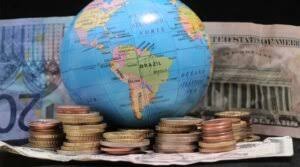
Global Payments Without Restrictions: A Complete Guide

The internet became global long before payments did
A freelancer in Bengaluru can work for a client in London overnight. A creator in Lagos can build an audience across the United States, Canada and the United Kingdom. A small ecommerce seller in Mexico City can reach buyers globally through TikTok, Instagram and online marketplaces.
Commerce became global extremely quickly. Payments did not.
Many people still experience restrictions when trying to move payments internationally:
- country limitations
- processor restrictions
- account reviews
- settlement delays
- currency conversion costs
- platform dependency
- merchant category restrictions
- cross-border payout friction
For businesses, creators and freelancers, payment access increasingly shapes whether work can happen smoothly at all.
That is why the idea of “global payments without restrictions” is becoming more important. The phrase does not mean removing compliance, identity checks or fraud controls. It means reducing unnecessary friction that prevents legitimate users from participating in global commerce.
Spondula is being built around that broader direction: a global payments network where users can send, receive, hold, accept and participate through wallets and S-Handles instead of relying entirely on fragmented banking details and isolated payout systems.
The aim is simple. Global payments should feel closer to sending a message than navigating disconnected financial systems.
Why global payments still feel fragmented
Modern users increasingly work across multiple countries simultaneously.
A software agency in Mumbai may invoice clients in Dubai, Singapore and New York during the same month. A creator in Manila may receive support from audiences spread across Europe and North America. A remote team in Pakistan may manage payroll across several countries at once.
Yet payments often remain tied to local infrastructure.
Most international payment systems still rely heavily on:
- SWIFT transfers
- bank intermediaries
- regional payment apps
- merchant acquiring systems
- processor-specific payout models
- country-by-country compliance frameworks
That structure creates operational complexity for globally connected users.
Platforms like PayPal, Wise, Payoneer, Stripe, Mercado Pago, GCash, Paytm and M-Pesa each solve important regional problems well. The challenge appears when users need payment systems that move more naturally across borders, platforms and business models.
Some systems work well for ecommerce but not creator payouts. Some support freelancers but restrict certain business categories. Some operate strongly domestically but offer limited international functionality.
The result is a globally connected internet operating on partially fragmented payment infrastructure.

Why restrictions affect creators, freelancers and merchants differently
Payment restrictions are not experienced equally.
Large enterprises often have dedicated banking relationships, multiple processors and treasury infrastructure. Smaller users usually do not.
That means restrictions can hit creators, freelancers and SMEs much harder operationally.
A creator in São Paulo may depend heavily on one payout processor for subscription income. A freelancer in Karachi may rely on one international payment route for overseas clients. A merchant in Lagos may depend on one settlement provider to maintain inventory flow.
When payment access is interrupted, the impact spreads quickly:
- income delays
- supplier issues
- cash-flow pressure
- withdrawal uncertainty
- business interruption
- customer frustration
The Financial Ombudsman Service explains that payment providers can freeze payments or restrict accounts where fraud, money laundering concerns or legal obligations apply. Those controls are important. The pressure emerges when users depend entirely on one platform relationship for everyday participation.
“Payment access increasingly functions as economic infrastructure for creators, freelancers and globally connected businesses.”
That is why many businesses now maintain multiple processors, multiple wallets and multiple payout systems simultaneously.
Why portable payment identity matters
Traditional payment systems were designed around institutional banking details:
- account numbers
- sort codes
- IBANs
- routing information
- reference fields
Modern commerce behaves differently.
People increasingly operate through:
- social profiles
- creator pages
- QR payments
- payment links
- mobile-first businesses
- cross-border online communities
Spondula positions the S-Handle as a portable payment identity layer connected to wallet infrastructure. Instead of relying entirely on banking details or processor-specific payout systems, users can share a simpler payment identity designed for global participation.
The same S-Handle can potentially connect to:
- QR payments
- creator tipping
- merchant checkout
- payment requests
- online commerce
- cross-border settlement
That matters because modern users increasingly expect payment identity to move naturally across platforms and countries.
How QR payments are reshaping global commerce
QR systems are becoming one of the most important shifts in modern payments because they reduce hardware dependency and simplify merchant onboarding.
A street-food seller in Manila can accept mobile payments without expensive terminals. A merchant in Nairobi can operate through smartphone-first checkout flows. A creator in Mexico City can display a payment QR directly during livestreams or online events.
The checkout experience becomes:
- scan
- confirm
- settle
That simplicity matters because much of modern commerce now begins socially before it becomes institutionally structured.
Businesses increasingly start through:
- TikTok
- YouTube
- Telegram
- marketplaces
QR payments align naturally with that mobile-first behaviour.
In India, UPI accelerated QR payment adoption dramatically. In Brazil, Pix changed expectations around instant transfers. In Kenya, M-Pesa helped normalize mobile-first payment behaviour. Across Southeast Asia, QR interoperability continues expanding rapidly.
The broader direction is clear: users increasingly expect payments to function directly from smartphones.
How Spondula approaches global payment participation
Spondula is not positioning itself as a traditional banking product. The network is being built around wallet-first payment participation.
The Spondula one-pager describes the network as a payment infrastructure where users can send, receive and hold pegged payment balances with wallet access, Operator-supported local infrastructure and compliant KYC/AML architecture. fileciteturn2file1L1-L33
Within that model, users can potentially:
- receive payments through an S-Handle
- use QR payments
- accept payment links
- participate through local Operators
- access wallet-first payment infrastructure
The everyday payment layer focuses on:
- USD-S
- GBP-S
- EUR-S
GOLD-S and BTC-S sit behind the payments layer rather than replacing it.
The emphasis remains on participation, portability and access rather than speculative positioning.
Why global payment infrastructure is shifting
The strongest payment systems increasingly share several characteristics:
- mobile-first access
- faster settlement
- simpler payment identity
- reduced hardware dependency
- cross-border interoperability
- portable wallet access
That shift is being driven by changes in behaviour as much as technology.
Modern workers increasingly:
- work remotely
- sell globally
- build creator businesses
- operate through mobile devices
- participate across several countries simultaneously
Traditional payment infrastructure was not originally designed around those patterns.
That is why wallet-first systems, payment identity layers and QR-native commerce are becoming more relevant globally.
The future of payments is likely less about local account details and more about portable digital participation.
Frequently asked questions
What does “global payments without restrictions” mean?
It generally refers to reducing unnecessary friction in legitimate cross-border payments, including settlement delays, platform dependency, fragmented payout systems and geographic limitations. It does not mean removing compliance requirements.
Can global payment systems operate without compliance checks?
No. Serious payment systems still require KYC, AML controls, fraud prevention and legal compliance frameworks.
Why do creators and freelancers struggle with international payments?
Many creators and freelancers rely heavily on processor-specific payout systems, regional availability, bank conversion processes and marketplace wallets that may introduce delays, restrictions or operational friction.
What is an S-Handle?
An S-Handle is a portable payment identity linked to a Spondula wallet. It is designed to simplify receiving payments across QR payments, payment links, online checkout and supported local access points.
Are QR payments becoming global?
Yes. QR systems are expanding rapidly across Asia, Africa and Latin America because they simplify merchant onboarding, reduce hardware dependency and align naturally with mobile-first commerce.
The global economy increasingly operates through mobile devices, creator platforms, remote work and cross-border digital commerce. Yet payment systems often remain fragmented between countries, processors and isolated platforms.
Spondula is being built around a simpler direction: wallet-first global payment participation through S-Handles, QR payments, portable payment identity and Operator-supported access designed for a borderless internet economy.
Claim your S-Handle before launch and join the waitlist for early access.
Spondula is a global payments network. It is not a bank, exchange, investment platform, or broker. Availability, pricing, and Operator coverage vary by country. Bitcoin rewards depend on real network activity and are not guaranteed. See our terms and conditions for full details.