Guides

How to Receive International Payments in the UAE Without High Fees or Delays

Spondula Team·5 min read·6 May 2026

How to Receive International Payments in the UAE Without High Fees or Delays

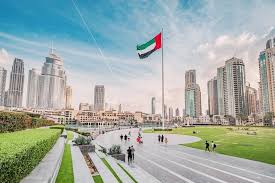
Dubai skyline representing global commerce and international payments

Dubai became global faster than payment infrastructure did

A freelancer in Dubai may invoice a client in London in the morning, receive a project request from New York by lunch, and onboard a customer in Riyadh before the day ends. A creator in Abu Dhabi may build audiences across India, Europe and North America simultaneously. A small ecommerce business in Sharjah may sell internationally through Instagram, TikTok and online marketplaces long before opening a physical office.

The UAE became one of the world’s most internationally connected business environments extremely quickly. Payments still create friction.

Many freelancers, creators and businesses in the UAE continue to face operational challenges when receiving international payments:

  • SWIFT transfer delays
  • intermediary banking fees
  • foreign exchange conversion costs
  • processor dependency
  • payment holds and reviews
  • withdrawal delays
  • cross-border settlement friction
  • country-by-country payment limitations

For globally connected businesses, payment access increasingly shapes operational flexibility itself.

Spondula is being built around a different direction: a wallet-first global payments network where users can send, receive, hold, accept and participate through wallets and S-Handles rather than depending entirely on fragmented banking details and isolated payout systems.

The aim is simple. International payments should feel closer to digital communication than institutional paperwork.

Why international payments in the UAE still create friction

The UAE sits at the intersection of several global payment corridors:

  • Europe → UAE
  • India → UAE
  • UAE → Pakistan
  • United States → UAE
  • Africa → UAE
  • GCC regional commerce

That creates enormous commercial opportunity, but also operational complexity.

A software agency in Dubai Internet City may invoice clients in the United States while paying contractors in Pakistan and India. A property consultancy in Abu Dhabi may receive payments from Europe while managing suppliers across several currencies. A creator business in Dubai Marina may monetize audiences globally through YouTube, Instagram and TikTok.

Yet many payment systems remain tied to:

  • local banking infrastructure
  • regional processor rules
  • merchant category restrictions
  • country-specific payout systems
  • compliance reviews
  • FX conversion layers

That fragmentation becomes increasingly visible as businesses operate globally by default.

Platforms such as PayPal, Wise, Stripe, Payoneer and traditional SWIFT systems each solve important parts of the problem. The challenge appears when users require payment systems that operate more naturally across countries, business models and mobile-first commerce.

The internet operates globally. Payment systems often still operate regionally.

Modern commerce and mobile-first business activity

How freelancers and creators receive international payments in the UAE

Many freelancers and creators in the UAE currently rely on combinations of:

  • SWIFT bank transfers
  • PayPal withdrawals
  • Payoneer payouts
  • Wise transfers
  • Stripe settlement systems
  • marketplace payout systems

These systems can work effectively, but they also introduce operational considerations:

  • currency conversion spreads
  • withdrawal timing
  • processor dependency
  • platform reviews
  • international settlement delays
  • merchant risk categorisation

A creator in Dubai may receive revenue from the United States, United Kingdom and Saudi Arabia simultaneously. A freelancer in Abu Dhabi may depend heavily on one payout route for international invoices. An ecommerce seller in Sharjah may rely on marketplace settlement systems that operate on delayed payout cycles.

That creates concentration risk.

When one processor becomes the primary route into global income, operational flexibility narrows significantly.


“Cross-border payment friction increasingly affects freelancers, creator-led businesses and globally connected SMEs operating across multiple markets.”

That is one reason businesses increasingly maintain:

  • multiple processors
  • multiple payout systems
  • multiple wallets
  • multiple settlement routes

Why FX costs and settlement delays matter more than people think

For internationally connected businesses, the visible transfer fee is often only part of the total cost.

Additional friction may include:

  • FX conversion spreads
  • intermediary banking deductions
  • settlement timing
  • withdrawal fees
  • payment processing reserves
  • cash-flow delays

A business waiting several days for settlement may delay:

  • supplier payments
  • contractor payouts
  • inventory purchases
  • marketing spend
  • operational scaling

That is particularly important in fast-moving industries such as:

  • creator commerce
  • ecommerce
  • remote services
  • digital agencies
  • consulting
  • cross-border trade

Modern businesses increasingly operate in real time. Traditional settlement structures often do not.

Customer using QR payments in modern retail environment

Why QR payments and wallet-first systems are expanding globally

QR systems are spreading rapidly because they reduce hardware dependency and simplify payment participation.

A merchant in Dubai can potentially accept payments through mobile-first checkout flows instead of relying entirely on traditional terminal infrastructure. A creator can display payment QR codes directly through livestreams, creator pages or online communities.

The checkout process becomes:

  • scan
  • confirm
  • settle

That simplicity matters because modern commerce increasingly begins socially before it becomes institutionally structured.

Businesses now frequently start through:

  • Instagram
  • TikTok
  • WhatsApp
  • YouTube
  • Telegram
  • online marketplaces

QR payments align naturally with that mobile-first behaviour.

Globally, systems such as UPI in India, Pix in Brazil and M-Pesa in Kenya accelerated expectations around instant and smartphone-native payment experiences.

The broader direction is clear: payment infrastructure is becoming increasingly mobile-first, wallet-first and identity-driven.

How Spondula positions global payment access differently

Spondula is not positioning itself as a traditional bank replacement. The network is being built around wallet-first payment participation.

The Spondula one-pager describes the network as a payment infrastructure where users can send, receive and hold pegged payment balances with wallet access, Operator-supported local infrastructure and compliant KYC/AML architecture. :contentReference[oaicite:0]{index=0}

Within that structure, users can potentially:

  • receive payments through an S-Handle
  • use QR payments
  • accept payment links
  • participate through local Operators
  • access wallet-first payment infrastructure

The everyday payment layer focuses on:

  • USD-S
  • GBP-S
  • EUR-S

GOLD-S and BTC-S sit behind the payments layer rather than replacing it.

The emphasis remains on participation, portability and operational flexibility rather than speculative positioning.

Why global payment infrastructure is changing

The strongest payment systems increasingly share similar characteristics:

  • mobile-first access
  • faster settlement
  • portable payment identity
  • cross-border interoperability
  • reduced hardware dependency
  • wallet-first participation

That shift is being driven by behavioural changes as much as technology.

Modern businesses increasingly:

  • operate remotely
  • sell internationally
  • hire globally
  • receive creator income
  • operate through smartphones
  • participate across several countries simultaneously

Traditional payment infrastructure was not originally designed around those patterns.

The future of international payments is likely less about isolated banking systems and more about portable digital participation.

Frequently asked questions

What is the best way to receive international payments in the UAE?

Many businesses use combinations of SWIFT transfers, PayPal, Wise, Stripe or Payoneer depending on business type and payment corridor. Newer wallet-first systems are also emerging to reduce dependency on fragmented payout structures.

Why do international payments in the UAE sometimes take several days?

Cross-border transfers may involve intermediary banks, FX conversion processes, compliance reviews and settlement timing between several financial institutions.

Can freelancers in the UAE receive payments globally?

Yes. Freelancers commonly work with international clients across Europe, North America, Asia and the GCC through bank transfers, payout platforms and digital payment systems.

What is an S-Handle?

An S-Handle is a portable payment identity linked to a Spondula wallet. It is designed to simplify receiving payments across QR payments, payment links, online checkout and supported local access points.

Does Spondula remove compliance requirements?

No. Spondula is designed with KYC and AML controls. Users, Operators and businesses must still comply with applicable rules and network requirements.

The UAE increasingly operates as a globally connected business hub where creators, freelancers, merchants and remote businesses interact across several countries simultaneously. Yet payment systems often remain fragmented between processors, banks and regional infrastructure.

Spondula is being built around a simpler direction: wallet-first global payment participation through S-Handles, QR payments, portable payment identity and Operator-supported access designed for a borderless internet economy.

Claim your S-Handle before launch and join the waitlist for early access.


Spondula is a global payments network. It is not a bank, exchange, investment platform, or broker. Availability, pricing, and Operator coverage vary by country. Bitcoin rewards depend on real network activity and are not guaranteed. See our terms and conditions for full details.

More in Guides