A designer in Lagos opens an invoice link from a Berlin client and sees 500 EUR-S arrive in her wallet before she puts her phone down. Across town, a market trader displays a QR code on a printed card and takes payment from a tourist visiting from London. In Manchester, a nurse sends 100 GBP-S home to her mother in Kerala by typing a single short name into the app. In Manila, a freelancer shares her Shandle on every invoice she sends to clients in Amsterdam, Toronto, and New York — no IBAN, no sort code, no long account string.
Four users. Four different payment moments. One network.
Spondula is a global money network built around five things anyone can do: send money, receive money, hold value, accept payments, and take part in a payment ecosystem that works across borders without unnecessary friction. The features below are how those five things happen in practice — every payment method, every wallet layer, explained plainly for anyone deciding whether Spondula fits the way they already live and work.
Pay with your Shandle — your name on the network
The first thing a new Spondula user claims is an Shandle: a short, memorable identifier that replaces every account number, sort code, IBAN, and wallet address they would otherwise have to share every time they want to receive money. An Shandle looks like Sadaeze, Spriya, Sandres, Schidera. It is chosen once at signup, on a first-come basis, and it follows the user across every surface on the network — their wallet, their payment links, their QR code, their contacts list.
When someone wants to pay them, they type the handle. That is it. No bank code. No 22-character string copied wrong from a typed SMS. No routing number. No SWIFT code. The handle is what the payment resolves to, and the network handles the rest.
Shandles are designed to be stable enough to trust. A 90-day cooldown sits between changes, so an Shandle is safe to print on a business card, add to a freelance invoice, or dictate to a client on a call and know it will still resolve weeks later. If a handle does change, the old version stays active for 30 days — any payment sent to the original address still lands correctly, giving contacts and saved payers time to update.
Over time, the Shandle does more than resolve a single payment. The contacts list in the wallet builds from previous sends and receives, which means once someone has paid Schidera once, Schidera appears in the quick-send list for every payment after. The handle is the identifier that makes the network feel like a network rather than a one-off transfer service — a name you send to, not an account number you type into.
For Personal users, an Shandle replaces the identifiers the traditional financial stack asks people to memorise, look up, and share carefully. For Business users and freelancers, it is the payment address that goes on every invoice, every email footer, every checkout confirmation, without leaking anything about the underlying account. For anyone receiving payments from clients in the UK, the US, Germany, Australia, or anywhere else on the network, a single short handle is the payment address that works everywhere.
QR code payments — scan, pay, done
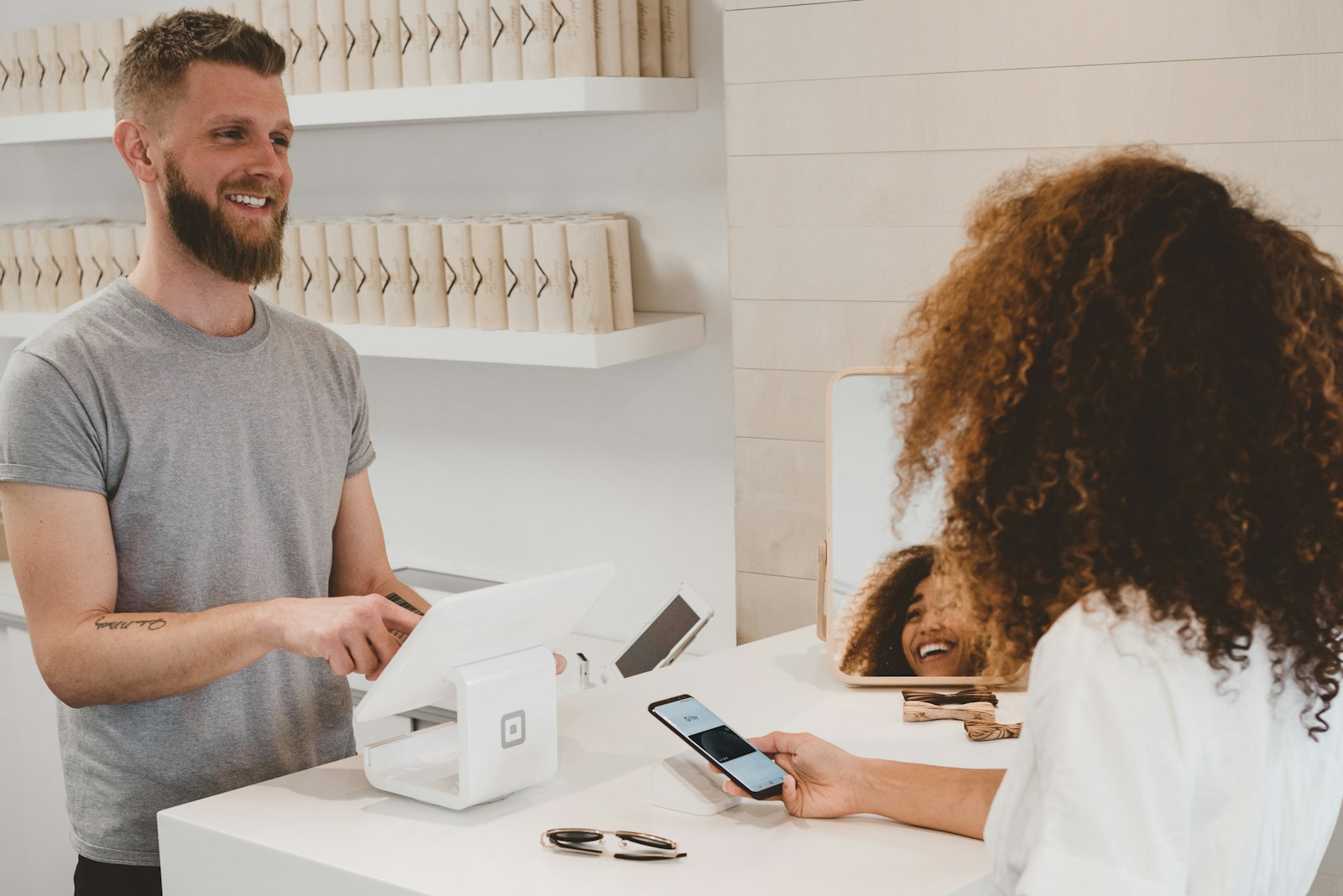
Every Spondula account generates a personal QR code. For a merchant, that code sits at the till, printed on a menu, stuck to a market stall, or displayed beside a till on any device. For an individual, it can be shown on a phone screen, sent in a message, or printed and attached to anything — an invoice, a door, a delivery note.
The payment flow is short. The payer opens the app, taps the QR scanner, points it at the code, and confirms. From scan to confirmation takes seconds — no card machine, no card network, no acquiring bank sitting between the payment and the settled balance.
QR payments work across every corridor the network supports. A customer visiting a Lisbon café from Lagos scans the same code as a visitor from London, Manila, or São Paulo — each paying in whichever token they hold, each arriving as a settled EUR-S balance for the merchant without a currency adjustment later. A market trader in Accra can take payment from a customer in Dubai. A street vendor in Nairobi can accept payment from a tourist from Paris or Toronto without a card terminal or a percentage to an acquiring bank. A workshop in Karachi, a restaurant in Lagos, a retailer in Jakarta — the QR code is the universal payment surface for any merchant who already owns a phone.
QR payments are also the clearest example of what peer-to-peer settlement looks like at street level: two phones, one code, no intermediaries.
Payment links — the Spondula online payment gateway
Payment links are Spondula's online payment surface. A user generates a link from the wallet — tied to their Shandle, set to a fixed amount or left open for the payer to fill in — and sends it wherever the payment needs to go: an email, an invoice, a WhatsApp message, a booking confirmation, or embedded in a website checkout.
The payer clicks the link, opens the payment screen on any device, and pays from their Spondula balance. Funds arrive in the payee's wallet instantly, with no card-network cut and no settlement delay.
For freelancers, this changes the whole cycle. A brand designer in Lagos invoicing a client in Berlin sends the payment link alongside the invoice. The client pays, and the balance is in the designer's wallet the same afternoon — not five working days later, not minus a wire transfer fee, not after passing through a correspondent bank in Frankfurt and a clearing house in London. A copywriter in Karachi sends the same kind of link to a client in New York or Houston. A developer in Accra invoicing a startup in Amsterdam sees the same result. The payment link is the invoice settlement for anyone who gets paid across borders and has spent too long watching the "pending" status sit unchanged.
For merchants with an online presence — a shop in Dhaka, a tutoring service in Nairobi, a subscription business in Manila, a handicrafts seller in Mexico City — the payment link becomes a checkout. Customers from anywhere in the world pay from their Spondula wallet, and the merchant receives a stable, settled balance without handling multiple currencies themselves. A single link works for a customer paying in GBP-S from London and for a customer paying in USD-S from Houston. The merchant sees a consistent settled amount; the routing is handled by the network.
The Spondula payment gateway sits alongside Shandle sends and QR payments as a third distinct way to accept money — designed specifically for the invoice flow, the online checkout, and the remote payment where payer and payee are not in the same room.
Peer-to-peer payments — money without the middleman
At its foundation, every payment on Spondula is peer-to-peer. The sender's wallet and the receiver's wallet settle directly on the network — no correspondent bank, no card scheme, no clearing house taking a day and a percentage to stand between them.
For a payment between two people in the same city, peer-to-peer settlement is almost invisible — it just feels fast. For a payment across borders, it is the entire point. A standard wire transfer from the UK to Nigeria passes through a chain of intermediaries, each adding a day and a fee. A payment on Spondula goes directly from wallet to wallet, arriving in seconds regardless of where the sender is and where the recipient lives.
In Q1 2025, banks averaged 9.50% on a $200 remittance while digital providers averaged 3.65%. Spondula's exchange spread is a flat 0.2% — one rate, shown before confirmation, with nothing added on top.
— World Bank, Remittance Prices Worldwide Issue 53, Q1 2025; Spondula exchange rate, 2026
This matters most in the corridors where the traditional stack struggles hardest. A parent in Manchester sending GBP-S to a daughter studying in Abuja sees it arrive the same afternoon. A business in Johannesburg settling a supplier invoice in Dubai does not wait for a cut-off time or a correspondent-bank relationship to exist. A worker in Qatar sending USD-S to family in Dhaka sends it on any device, any hour, any day of the week — no bank holiday, no booking window, no wait.
Peer-to-peer settlement is also why the fee structure is different. When there is no intermediary chain, there is no stack of undisclosed markups to pass through. The 0.2% exchange spread is the one cost — displayed up front, before the send is confirmed. What is quoted is what is charged.
A multi-currency wallet that holds your world
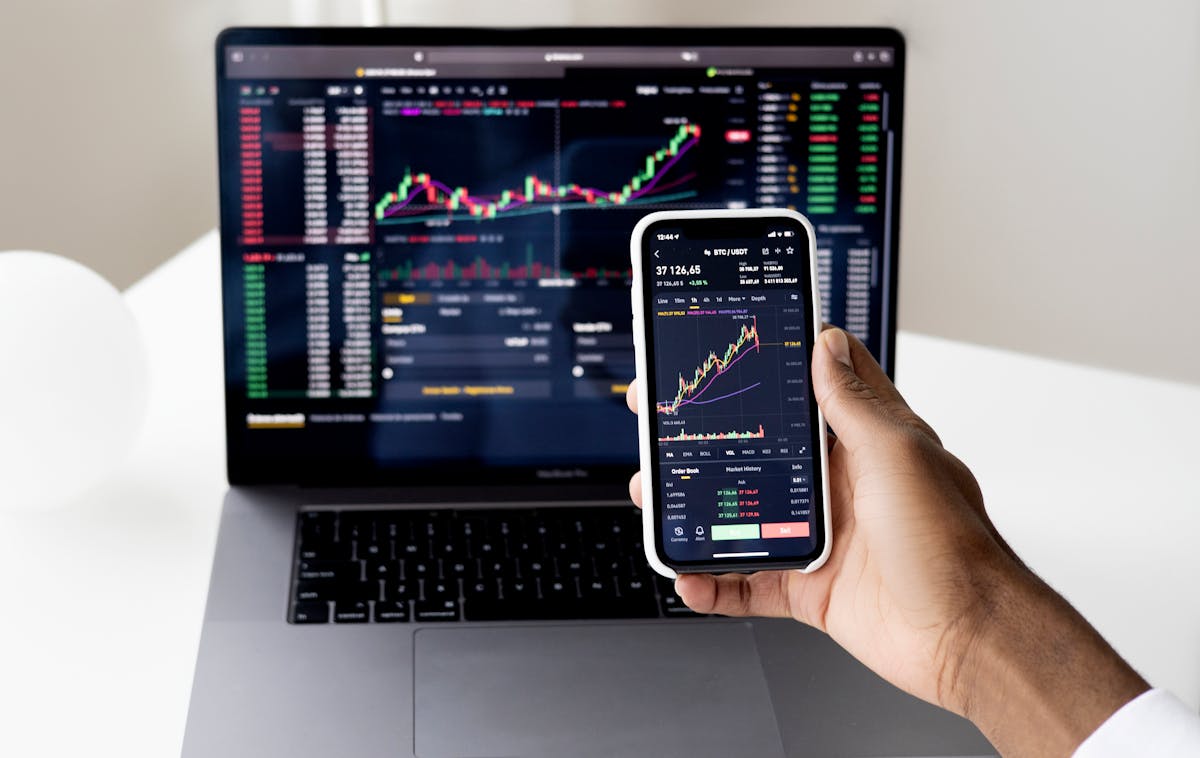
A Spondula wallet holds multiple stable-asset tokens simultaneously. At launch, the supported range includes GBP-S, USD-S, EUR-S, JPY-S, CAD-S, AUD-S, NZD-S, SGD-S, HKD-S, AED-S, SAR-S, NGN-S, KES-S, ZAR-S, EGP-S, INR-S, MYR-S, IDR-S, KRW-S, CNY-S, MXN-S, BRL-S, PLN-S, TRY-S, SEK-S, NOK-S, DKK-S, CHF-S, and more — alongside GOLD-S and BTC-S.
The balance a user holds is the mix they choose. A nurse in Manchester keeps the bulk in GBP-S for everyday use and moves a portion into USD-S before sending to family in Lagos. A freelancer in Manila holds USD-S for international invoices and EUR-S for European clients who pay in euros. A merchant in Accra holds USD-S as a stable working balance and converts to local currency through a Spondula Partner Location when needed. A business in Riyadh holds AED-S alongside SAR-S for regional payments.

Each swap between tokens costs a flat 0.2% spread — shown before confirmation, no hidden adjustment when funds settle. The rate shown is the rate received. There are no mid-market markups dressed as a service charge, no surprise variations when the balance lands.
The breadth of the asset list matters for geographic reach. A user in Lagos holding NGN-S can receive USD-S from a sibling in London. A user in Nairobi holding KES-S can receive EUR-S from a client in Amsterdam. A worker in Mexico City holds MXN-S alongside USD-S for US corridor payments. A business in Singapore holds SGD-S alongside USD-S for the Asian corridors where those are the working currencies. No single currency is the default; the network treats every denomination as a first-class resident of the same wallet.
The key feature of the multi-currency wallet is not that it holds many currencies — it is that it does so in one place, at one spread, with no separate account for each.
Hold value in gold. Earn Bitcoin as you use the network.
Above the everyday money layer, Spondula offers two further stores of value: GOLD-S for holding and BTC-S for earning.
GOLD-S is the stable-value layer. A user who wants part of their balance to sit away from any single currency's movement can hold it in GOLD-S — not as an investment, but as a separate drawer in the wallet for the money that is not moving right now. A user who keeps 2,000 GBP-S for everyday sends might move a portion into GOLD-S for the month, then bring it back when needed. Gold on Spondula is a place for value to sit, not a product to chase.
BTC-S is the reward layer. It arrives in the wallet as friends a user refers join Spondula and start transacting — tied to real network activity, not to signup alone. A user who refers friends in Lagos, London, Nairobi, or Karachi who each start sending and receiving accumulates BTC-S in the background, visible in the asset list alongside GBP-S and GOLD-S. The Bitcoin is the growth layer on top of ordinary use, not the reason to be on the network in the first place.
The money hierarchy is deliberate: everyday stable money first, gold second, Bitcoin third. Spondula is a payments network. The value layers sit below the payment surface — useful, not the headline.
Designed for anyone — with or without a bank account
Spondula works whether the user has a traditional bank account or not. The wallet is the account. Topping up happens via a card or a bank transfer for users who have one. For users who do not, topping up with cash happens at a Spondula Partner Location — a Local Operator running an access point in their area. Cashing out follows the same path.
Roughly 1.3 billion adults worldwide remain without a formal financial account (World Bank, Global Findex Database, 2025). Many of them own a smartphone. Many of them send or receive remittances. Many of them are exactly the users the traditional cross-border payment stack was not built for. Spondula's design starts from the other direction: the wallet works with or without a bank behind it, and the Operator network exists to make the last mile real in places where bank branches are sparse.
A user in Lagos who receives GBP-S from a sibling in London does not need a bank account to hold, use, or convert that value. A trader in Accra accepting payment from customers across West Africa does not need a merchant acquiring relationship. A worker in Dhaka sending earnings to family in Rajshahi does not need both sides of the transaction to be banked. The three steps on the network — top up, send, receive locally — work whether the user's on-ramp is a card, a bank transfer, or a cash top-up at a Partner Location near them.
This is not framed as charity or inclusion for its own sake. It is a design choice about who the network's default user is: anyone, not just anyone with a legacy bank account. The How It Works page says it plainly: "Three steps to move payments across the world — whether your recipient has a bank account or not."
The global corridors Spondula is built for
Cross-border payments are most broken in the corridors that carry the most volume. Those are the corridors Spondula is built for first.
UK → Nigeria is one of the most-used remittance routes in the world and one of the most expensive. Traditional banks have charged between 8% and 10% on a UK-to-Nigeria send (World Bank RPW corridor data, 2025). GBP-S sent to Lagos, Abuja, Port Harcourt, or Ibadan via Spondula bypasses that chain and the correspondent hops that price it.
India → Gulf — UAE, Qatar, Saudi Arabia, Kuwait, Bahrain — moves billions of dollars a year as the Indian diaspora sends home. A worker in Dubai or Riyadh sending USD-S or AED-S to a parent in Kerala, Mumbai, Delhi, or Hyderabad sends it in seconds and holds it as INR-S on the receiving side.
Philippines → anywhere is one of the highest-volume corridors on earth. Filipino workers in the UAE, the UK, Hong Kong, Singapore, Canada, and the US sent remittances totalling approximately $40 billion in 2024 (World Bank, Migration and Development Brief, 2024). A worker in Riyadh sending USD-S to a family in Manila, or a nurse in London sending GBP-S to a household in Cebu, uses the same network, the same handle, the same flat spread.
Ghana → Germany, Kenya → UK, Kenya → Qatar: East Africa is one of the world's most developed mobile-money ecosystems, and Spondula connects it to the European and Gulf corridors where the Kenyan and Ghanaian diaspora earn. A worker in Doha sends KES-S to family in Nairobi. A professional in Hamburg sends EUR-S to a sibling in Accra.
Mexico → US is the single largest bilateral remittance corridor in the world. Families on both sides of the border send USD-S and MXN-S across a distance that the traditional wire infrastructure still treats as a multi-day, multi-fee operation.
Pakistan → UK, Bangladesh → Gulf, South Africa → Zimbabwe, Egypt → Saudi Arabia, Indonesia → Malaysia: every corridor where the gap between what a sender pays and what a family receives is measured in percentage points rather than fractions of a percent is a corridor where peer-to-peer settlement changes the outcome for real people.
Business payments travel the same corridors. A Berlin agency settling a Lagos designer's invoice, a Dubai company paying a Nairobi supplier, a São Paulo business paying a London vendor, an Amsterdam e-commerce brand paying a Manila fulfilment partner — these are not remittance payments, but they move on the same rails, at the same speed, with the same spread. The network does not distinguish between a personal send and a business payment. The corridor is the corridor.
Security, control, and verified access
Spondula uses a secure wallet infrastructure with authorised access controls — verified users, a PIN or biometric lock at the app level, and a design that keeps the user in control of their funds at all times. Nothing moves from a wallet without the account holder's authorisation.
The wallet is non-custodial in the sense that matters most to everyday users: you decide when to send, what to hold, and when to cash out. The network handles the routing; the user holds the keys to the decision. Security on Spondula is a property felt in the experience rather than a system the user has to understand — authorised access, verified accounts, secure by design.
For businesses, the same principle extends to the payment flow. A payment link, a QR code, or an Shandle send is a payment the merchant explicitly generates and the payer explicitly authorises — no card chargebacks, no disputed transactions from a card scheme, no network reversal window of 60 days waiting to happen.
Available on web and Android, from anywhere
Spondula is accessible on the web and as a native Android wallet. The experience is the same wallet, the same balance, the same payment methods — Shandle, QR, payment link, peer-to-peer send — across both surfaces. A user in London can send from a browser. A user in Lagos can send from the Android app. A merchant in Manila can display the QR from the app while managing payment links from the desktop.
The network is designed for global use from day one. Not "global" as a future state; global as the default. A wallet created in Nairobi and used in London and Karachi and Dubai is the same wallet throughout. The Shandle travels with it. The balance travels with it. The contacts travel with it. Anyone, anywhere, anytime — that is the design brief, not the marketing line.
Frequently asked questions
What is an S-handle and how do I claim one?
An Shandle is your personal identifier on the Spondula network — a short, memorable name like Sadaeze or Spriya that replaces account numbers, IBANs, and sort codes when someone wants to pay you. You claim it during signup, first-come basis, and it stays with you across every payment surface on the network. Anyone who wants to pay you types your handle; the network resolves it to your wallet. Handles have a 90-day cooldown between changes and a 30-day grace period after a change, so the handle on your invoice or in a contact's saved list will still resolve correctly.
How does QR code payment work on Spondula?
Every Spondula account has a personal QR code. To pay someone, open the app, tap the QR scanner, point it at their code, confirm the amount, and send — the payment settles in seconds. For merchants, the QR code can be displayed at a counter, printed on a card, or shown on any screen. For individuals, it can be shown on a phone screen or shared as an image. The QR code works for payments from any Spondula wallet, regardless of where the payer is in the world.
What is a payment link and how do I use one?
A payment link is generated from your wallet — tied to your Shandle — and can be set to a fixed amount or left open for the payer to enter. Send it via email, on an invoice, in a messaging app, or embed it in a website checkout. When the payer clicks and pays, the funds arrive in your wallet instantly. Payment links are particularly useful for freelancers sending invoices to clients in other countries, and for merchants who want to accept online payments without a card-processing integration.
Can I use Spondula without a bank account?
Yes. The Spondula wallet works with or without a traditional bank account. You can top up via a card or bank transfer if you have one, or top up with cash at a Spondula Partner Location near you. Receiving money does not require a bank — your wallet holds the balance and you can convert or cash out at a Partner Location whenever you need local currency in hand. The network is designed so that "whether your recipient has a bank account or not" is not a blocker for any payment.
What currencies does Spondula support?
Spondula supports a wide range of stable-asset tokens at launch, including GBP-S, USD-S, EUR-S, JPY-S, CAD-S, AUD-S, SGD-S, AED-S, SAR-S, NGN-S, KES-S, ZAR-S, EGP-S, INR-S, MXN-S, BRL-S, and more — alongside GOLD-S and BTC-S. You can hold multiple tokens in the same wallet simultaneously. Swapping between them costs a flat 0.2% spread, shown before you confirm. Availability varies by country; check the network coverage for your corridor.
What is the fee for sending money on Spondula?
Sending between Shandles on the same token is free. When you swap between tokens — for example, converting GBP-S to USD-S before sending — the cost is a flat 0.2% spread. There are no hidden markups on top of that rate, no separate "service fee", and no adjustment when the funds settle. The rate shown before you confirm is the rate you get. By comparison, banks averaged 9.50% on a $200 remittance in Q1 2025 (World Bank, Remittance Prices Worldwide Issue 53, 2025).
How fast do Spondula payments arrive?
Payments on the Spondula network settle in seconds. Whether you are sending GBP-S to family in Lagos, receiving EUR-S from a client in Berlin, or accepting a QR payment at a market in Accra, the balance arrives before the conversation is over. The speed comes from the peer-to-peer architecture — there is no correspondent-bank chain to pass through and no cut-off times to plan around.
What is the difference between sending by S-handle, QR code, and payment link?
All three settle in seconds on the same network — they are three different front doors to the same payment. The Shandle is for sending directly to someone you know, in-person or remotely. The QR code is for in-person payments — a merchant displaying the code, a friend showing their screen. The payment link is for remote payments — invoices, online checkouts, and any situation where the payer and payee are not in the same room. A single Spondula account gives you access to all three at once.
Is Spondula available in my country?
Spondula is building coverage across multiple regions, with Operators active in key corridors at launch. Availability, pricing, and Operator coverage vary by country. Join the waitlist and you will be notified when the network reaches your corridor — and early waitlist members in high-priority corridors will be among the first to receive access.
What is a Spondula Partner Location?
A Spondula Partner Location is a Local Operator — a shop, kiosk, or trusted local business — where you can top up your wallet with cash, convert your wallet balance into local currency, or interact with the network in person. Partner Locations are the last-mile access points that make the network work for users without a bank account and for anyone who needs to move between digital wallet value and physical cash in their area.
Spondula is pre-launch, and the waitlist is where early users come in. If any of the payment flows above describe something you have been waiting for — a simpler way to get paid across borders, a wallet that works whether you have a bank account or not, a handle that replaces the account numbers — the waitlist is the quiet way in. Anyone. Anywhere. Anytime.
Spondula is a global payments network. It is not a bank, exchange, investment platform, or broker. Availability, pricing, and Operator coverage vary by country. Bitcoin rewards depend on real network activity and are not guaranteed. See our terms and conditions for full details.