
Guides

Get paid globally as a freelancer — without the five-day wait

Spondula Team·5 min read·24 Apr 2026
The invoice that paid on a Tuesday

On Friday morning, Mira finishes the final screens for a mobile app redesign and sends the files to her client in Austin. Three weeks of work, clean delivery, good feedback. The client replies within the hour: payment sent. By Tuesday afternoon the money has not arrived. By Wednesday it lands — minus a wire fee neither of them knew was coming, and at an exchange rate that was not the one on the screen when the client pressed confirm.

That gap between "payment sent" and "payment received" is where a meaningful share of freelance earnings disappears every week, in every country, for every freelancer who invoices across a border. The money is not lost. It is sitting in a correspondent-banking chain that was designed in a world before the internet and has not fundamentally changed since.

This article is about what the payment flow looks like when that chain is removed — and what a freelancer in Manila, Cebu, Davao, or anywhere else in the world actually needs to set up to start receiving client payments in seconds rather than business days.

Why international payments still take days in 2026

A wire transfer from Austin to Manila does not travel in a straight line. The payment enters a SWIFT messaging chain that typically passes through one, two, or three correspondent banks before it reaches the recipient's local bank. Each institution along the chain runs its own compliance screening, its own cut-off times, and its own fee — visible to the bank, invisible to the freelancer watching the status sit unchanged.

A standard international wire takes between one and five business days to settle (industry analyses of SWIFT processing flows, 2026). On a Friday send, "one to five business days" means the earliest the freelancer sees anything is Monday — if everything clears first time, if no bank along the chain has a public holiday, and if the correspondent relationship between the sending and receiving banks is direct. When it is not direct, the timeline extends. When a holiday falls in the middle, the timeline extends again.

The freelancer, meanwhile, has already started the next project. The client, for their part, has already moved on. The payment sits in transit as a structural feature of the system, not as an error by either party.

For a Filipino freelancer supporting a household, the delay compounds in a specific way. The payment arrives late. The exchange rate on the day of arrival is not the rate quoted when the client sent. The wire transfer fee — deducted somewhere in the chain — only becomes visible after the fact, in the difference between what was sent and what landed. The sum that arrives is not the sum that was agreed, and finding out which part of the chain took how much requires a call to a bank that cannot always answer the question.

What the five-day wait actually costs a freelancer

Five days is not just inconvenient. For a freelancer running a household on invoice income, five days of float is five days of planning around uncertainty: whether to pay a bill now or wait, whether to take on the next project or hold, whether to send money home this week or next. It is also five days in which the exchange rate moves — sometimes in the freelancer's favour, more often not.

The wire fee compounds the calculation. A fixed transfer charge of anywhere from USD 15 to USD 45 — deducted regardless of the invoice amount — is a meaningful percentage of a USD 150 invoice and a negligible one on a USD 5,000 project. Freelancers who do high-volume, smaller-invoice work absorb the most damage. A content writer sending eight invoices a month at USD 120 each is paying a wire fee on every one of them. The annual cost of the correspondent-banking chain is a number that is worth calculating once and then never forgetting.

A standard international wire transfer typically takes one to five business days to settle — with each correspondent-bank hop adding roughly one business day for compliance screening and booking.

— Industry analyses of SWIFT processing flows, 2026

There is also a softer cost that does not appear on any invoice: the time spent chasing. The follow-up email on day three. The check-in on day four. The bank reference request on day five. For a freelancer whose working time is their income, every hour spent on payment administration is an hour not spent on the next project.

A payment that arrives before the call ends

On the Spondula network, a payment from a client in Austin to a freelancer in Manila settles in seconds. The client pays to the freelancer's Shandle — a short, memorable identifier that replaces the bank account number, routing code, and SWIFT details the traditional wire requires — and the balance appears in the freelancer's wallet before the next email in the thread has been opened.

There is no banking holiday that can pause a Spondula send. There is no cut-off time that pushes a Friday payment into Monday. There is no correspondent bank standing between the client and the freelancer adding a day and a fee. The payment travels directly from one wallet to the other, on a peer-to-peer network that does not observe the working hours of the institutions it replaces.

For a freelancer in Cebu working for a client in London, the gap closes the same way. For a developer in Davao invoicing a startup in Amsterdam, the same. For a virtual assistant in Quezon City on a monthly retainer with a company in Toronto, the same. The speed is not conditional on the corridor — it is a property of how the network is built, not of where the sender and receiver happen to be.

Laptop open on a clean desk with a coffee cup, natural window light

Your Shandle: the invoice detail that works everywhere

The first thing to set up is an Shandle — a personal identifier on the network that replaces every account number, sort code, IBAN, and SWIFT code that clients in different countries currently need to send a wire to the same freelancer.

An Shandle looks like Smira, Scarlo, Sjanice. It goes on the invoice where the bank account details used to go. The client copies it, opens Spondula, types it in, and pays. The payment resolves to the wallet in seconds.

For a freelancer managing clients across multiple countries — a copywriter in Manila with clients in New York, Sydney, Toronto, Berlin, and Singapore — the Shandle is the single payment address that works for every one of them. No routing number for the US client. No BSB for the Australian one. No IBAN for the German one. No SWIFT code for the Singaporean one. One handle, every client, every corridor.

The handle is also stable by design. A 90-day cooldown sits between changes, so it is safe to print on an invoice template, add to a LinkedIn profile, or put in an email signature and know it will still resolve months later. A client who has paid once has the handle saved; the next invoice is three taps for them, zero admin for the freelancer.

There is a secondary benefit that does not appear in any feature list: the Shandle does not leak account information. A bank account number and sort code, handed to enough clients over enough years, is a security surface. An Shandle resolves to a wallet and reveals nothing about the underlying account. For a freelancer who invoices widely, that distinction is worth something.

Send a payment link, get paid the same hour

Alongside the Shandle, the Spondula payment link is the tool that changes the invoice cycle. A link is generated from the wallet — tied to the freelancer's handle — and set to the exact invoice amount. It goes out as a line on the invoice PDF, a button in the email body, or a message in the client's Slack channel. The client clicks, opens the payment screen, and pays. The balance arrives in the freelancer's wallet before the project retrospective has started.

For a virtual assistant in Manila managing retainer clients in the US and the UK, a payment link on a recurring invoice is the same link every month. The client bookmarks it, pays on the first of the month, and the assistant sees the balance land without a follow-up, a reminder, or a check-in. The payment becomes as automatic as a direct debit — without requiring a bank mandate, a signed agreement, or a recurring billing system.

For a web developer in Davao invoicing a startup in Düsseldorf for a project milestone, the link goes out with the code delivery and the payment clears the same afternoon. The client does not need to navigate international banking. They click, they pay, they move on. The friction that causes freelancers to lose hours chasing invoices is removed at the point the invoice is sent.
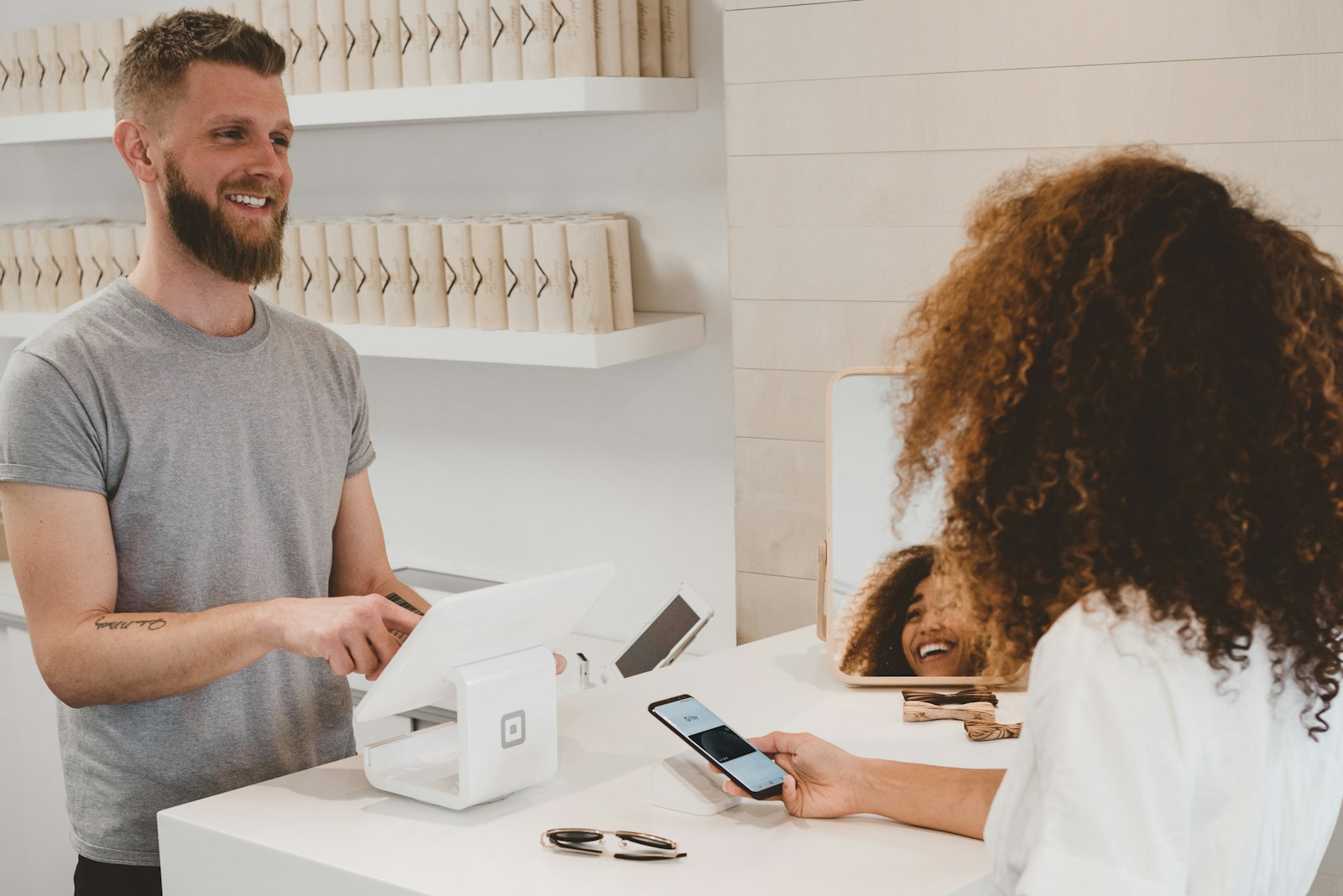

Payment links also solve a specific problem with clients who are not experienced with international wire transfers. A client who has never sent a SWIFT payment, who is not sure what a routing number is, or who simply finds the traditional wire form intimidating, has no barrier with a Spondula link. Click, pay, done. The client experience is closer to settling a restaurant bill than filing a bank transfer.

The combination of an Shandle and a payment link replaces the entire block of bank details on a freelance invoice — and replaces the five-day wait with a confirmation that arrives before the invoice email has been closed.

Person reviewing an invoice on a phone screen at a desk

Hold what you earn, in the currency that works for you

A Spondula wallet holds multiple currencies simultaneously, and the freelancer chooses the mix. A designer in Manila who bills in US dollars holds USD-S. A developer with European clients alongside US ones holds both USD-S and EUR-S in the same wallet. A copywriter with Australian clients adds AUD-S. A content creator with clients in Singapore holds SGD-S alongside whatever other currencies are landing from other directions.

Each conversion between currencies costs a flat 0.2% spread — shown before the swap is confirmed, with nothing added on top. The rate quoted is the rate charged. There are no hidden FX markups buried in the exchange rate, no post-settlement adjustment, no difference between what the client sent and what appears after the conversion.

Bar chart: bank wire 9.5%, digital provider 3.65%, Spondula 0.2% — World Bank RPW Q1 2025

The wallet is also not a clearing account that needs to be emptied before it loses value. A balance held in USD-S is stable. A freelancer who invoices on Monday and wants to convert to another currency on Thursday holds the value intact in between — not subject to the holding-period rate drift that payment processors sometimes apply to balances sitting in transit accounts.

The corridors Filipino freelancers work across

The Philippines is home to one of the largest remote-working and freelance communities in the world. Filipino designers, developers, writers, virtual assistants, and digital specialists work for clients across every major economy — and the payment corridor for every one of those relationships runs through the same SWIFT chain, with the same delays. Each corridor below is one a Filipino freelancer is likely already working across.

Philippines → United States. The largest single corridor for Filipino freelance earnings. Brand designers, software developers, copywriters, and virtual assistants billing US clients — agencies in New York, startups in San Francisco, companies in Chicago, Houston, and Los Angeles — receive payment in seconds on the network, without the correspondent chain that routes a SWIFT wire through New York before it reaches Manila.

Philippines → United Kingdom. Content creators, SEO specialists, and marketing freelancers working with UK agencies and publishers in London, Manchester, Edinburgh, and Birmingham are on a corridor where a bank wire can take three to four business days at its fastest. The payment link changes that to the same afternoon.

Philippines → Australia. One of the fastest-growing freelance corridors in the region. Web developers, UI designers, and remote operations specialists in Cebu, Davao, and Manila work with Australian clients in Sydney, Melbourne, Brisbane, and Perth — a corridor where the time zone difference alone makes the SWIFT delay feel longer, and where same-day settlement changes the working relationship.

Philippines → Canada. Virtual assistants and project managers on retainer with Canadian agencies and companies — particularly in Toronto, Vancouver, and Montreal — navigate the same five-day window as the US corridor. The network reaches both.

Philippines → Germany, Netherlands, France, Spain. European clients paying Filipino freelancers are among the most likely to experience the full correspondent-chain delay — EU-to-APAC SWIFT routes tend to be longer than transatlantic ones. EUR-S settles on the network the same afternoon the client pays it, regardless of whether the client is in Berlin, Amsterdam, Paris, or Madrid.

Philippines → Singapore, Hong Kong, Japan, South Korea. Regional clients across Asia often settle through local bank wires that are still correspondent-chain dependent for a Philippines recipient. A developer in Manila with a startup client in Singapore, or a motion designer with a Tokyo-based agency, uses the same handle and the same payment link regardless of which direction the corridor runs.

Philippines → UAE, Saudi Arabia, Qatar, Kuwait. The Gulf corridors that Filipino workers have used for decades also carry freelance earnings for digital professionals. A content strategist in Manila with a Dubai client and a data analyst with a Riyadh agency both settle on the same network — the same handle, the same link, the same seconds.

The common thread across every corridor: one Shandle on the invoice, one payment link in the email, and the balance arrives in the wallet before the client's payment confirmation has been read.

For every kind of freelance work in Manila, Cebu, and beyond

The payment flow works identically regardless of the service being sold. The invoice, the link, the handle, the arrival — these are the same whether the work is a logo or a codebase, a monthly retainer or a one-off project. The freelance profiles that benefit most are the ones already invoicing across borders:

  • Brand designers and graphic designers working with agencies in New York, London, and Amsterdam on per-project fees where payment turnaround affects cash flow more directly than on longer engagements.
  • Web developers and software engineers delivering milestone-based work to startups in San Francisco, Berlin, and Singapore, where the payment should land the day the build ships, not the week after.
  • Copywriters and content creators billing US and UK publications and brands at rates where a USD 20 wire fee represents a meaningful share of the invoice.
  • Virtual assistants and remote operations specialists on monthly retainers with clients in Australia, Canada, and the US, where a recurring payment link replaces the monthly invoice-and-chase cycle entirely.
  • UI/UX designers contracted to product teams in Europe and North America on sprint-based billing, where same-day settlement aligns with how agile projects actually run.
  • Video editors, animators, and motion designers delivering files to clients in the UK, Australia, and the US — where the asset delivery and the payment should arrive at the same moment, not a week apart.
  • SEO and digital marketing specialists on monthly contracts with agencies in Germany, the Netherlands, and the United States, where the retainer is predictable enough for a single recurring link to handle it indefinitely.
  • Data analysts, researchers, and consultants delivering reports and recommendations to companies across North America and Europe on project fees that are large enough to make the correspondent-chain delay genuinely disruptive to business planning.

The fee difference is sharpest at the lower end of the invoice range. A wire transfer fee is fixed; the Spondula spread is percentage-based. For a USD 100 invoice, a USD 20 wire fee is a 20% levy on the payment. At a flat 0.2% spread, the same invoice carries a 20-cent exchange cost. For a freelancer sending eight or ten invoices a month at smaller amounts, that difference across a year is worth calculating once.

With or without a bank account

Spondula works whether the freelancer has a traditional bank account or not. The wallet holds the earnings. A freelancer who wants to convert and move money into a local bank does so when it suits them, not when a payment processor's payout schedule allows it. A freelancer who does not have a bank account holds the earnings in the wallet and accesses local currency through a Spondula Partner Location when needed.

For the client side, the same flexibility applies. A client with a Spondula wallet pays directly. A client who is new to the network has a short onboarding path — and a freelancer who refers them moves both parties up the waitlist queue.

The barrier to getting paid across borders is lower on both sides than a wire transfer that requires both parties to correctly exchange a SWIFT code, an account number, a routing number or IBAN, and sometimes a bank address. One Shandle replaces all of it.

Frequently asked questions

How does a freelancer in the Philippines set up to receive international payments on Spondula?

Sign up for a Spondula wallet and claim your Shandle — a short identifier like Smira or Scarlo. Add your handle to your invoice template where the bank account details usually go. Generate a payment link from the wallet for each invoice, or share your handle directly with the client. When a client pays the link or types your handle, the balance arrives in your wallet in seconds. No bank codes, no SWIFT details, no routing numbers.

How long does a payment take to arrive from a client in the US, UK, or Australia?

Seconds. Spondula payments settle peer-to-peer on the network rather than passing through a correspondent-bank chain. A client paying from their wallet in San Francisco, London, or Sydney sees the payment arrive in a Manila wallet before the confirmation email has been read. There are no banking hours, no cut-off times, and no additional days added by intermediary banks.

What does it cost to receive an international payment on Spondula?

Receiving a payment is free. If you convert between currencies — for example, receiving USD-S and wanting to hold in another denomination — the conversion costs a flat 0.2% spread, shown before you confirm. There is no wire transfer fee, no receiving-bank charge, and no hidden exchange-rate markup added after the fact. The cost on a USD 500 invoice is USD 1. On a USD 100 invoice, it is 20 cents.

Can my client pay me if they are not familiar with international wire transfers?

Yes — and this is one of the more practical advantages of the payment link. A client who has never sent a SWIFT transfer, is not sure what a routing number is, or finds the traditional wire form confusing, has no barrier with a Spondula payment link. They click a link, open the payment screen, confirm the amount, and pay. The experience is closer to settling a bill than filing a bank transfer. If they do not yet have a Spondula wallet, the link walks them through a short signup before payment.

Which currencies can I hold as a freelancer?

USD-S, GBP-S, EUR-S, AUD-S, CAD-S, SGD-S, AED-S, and more — multiple currencies in the same wallet simultaneously. If a US client pays in USD-S and a UK client pays in GBP-S, both balances sit in the same wallet and you decide when and whether to convert each one. The mix is yours to manage.

What is an S-handle and does it replace my bank details on an invoice?

Yes. An Shandle is your payment identifier on the Spondula network — a short name like Sjanice that replaces the bank account block on a freelance invoice. Any client with a Spondula wallet pays you by typing your handle or clicking your payment link. It is shorter than an IBAN, simpler than a routing number, and it works for every client in every country without a different format per corridor. It also reveals nothing about your underlying account — unlike a sort code and account number, which are security-relevant details you share every time you invoice.

Can I use Spondula without a Philippine bank account?

Yes. The Spondula wallet works with or without a traditional bank account. You receive client payments into your wallet, hold them as stable value, and access local currency through a Spondula Partner Location when you need cash. Bank account ownership is not a prerequisite for receiving international payments or holding a stable wallet balance.

Does the payment link work for recurring monthly invoices?

Yes. Generate a payment link for the monthly amount and send it to your client. For recurring retainers, the same link can be reused each month — the client bookmarks it and pays without a new invoice being generated. The balance arrives in your wallet the moment they send it. For clients on different retainer amounts, separate links handle each one. There is no recurring billing setup required beyond the link itself.

Is Spondula available for freelancers outside the Philippines?

Spondula is a global network built for freelancers and clients anywhere in the world — not specific to one corridor or one country. A freelancer in Mexico, India, Ghana, Kenya, Pakistan, or anywhere the network reaches uses the same Shandle and payment link flow. Availability varies by country; the waitlist is the first step for early access wherever you are.

Spondula is pre-launch, and freelancers are among the first in the queue. If you have spent a working week watching an invoice sit in pending while a rent date moves closer, the waitlist is where early access starts. One handle, every client, every corridor — the payment arrives before the conversation about the next project has begun.


Spondula is a global payments network. It is not a bank, exchange, investment platform, or broker. Availability, pricing, and Operator coverage vary by country. Bitcoin rewards depend on real network activity and are not guaranteed. See our terms and conditions for full details.

More in Guides