Guides

Pay the person next to you — or the one across the planet

Spondula Team·5 min read·25 Apr 2026
Same tap. Same seconds. Doesn't matter where they are.

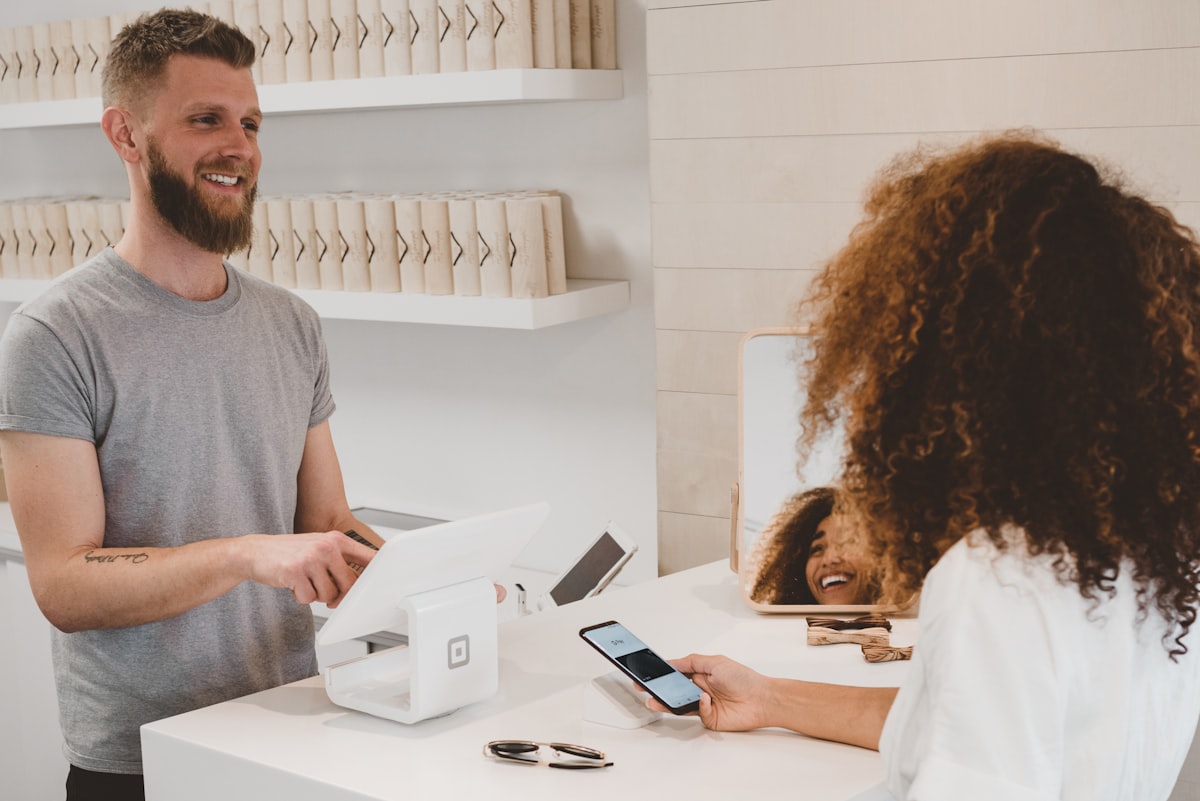
Last Saturday, Kenji paid his share of a dinner in Tokyo. He tapped his phone, sent to a friend's Shandle, and it was done. Later that evening, he sent his monthly support payment to his mother in Cebu. Same app. Same tap. Same amount of thought involved. The fact that one payment crossed 2,000 kilometres and one crossed a restaurant table made no practical difference to either of them.

That is what a genuinely global payment network looks like. Not an app for cross-border transfers that also works locally, or a local payment app that happens to have an international feature buried two menus deep. One experience, every distance, every direction.

Why distance still matters — and why it shouldn't

The reason paying someone across the world still feels different from paying someone across the room is structural. Domestic payments — Venmo, bank transfers between accounts at the same bank, tap-to-pay at a card reader — run on rails that were built for one country, one currency, one set of banking relationships. Cross-border payments run on a completely different set of rails, built in a different era, designed around different assumptions.

Those two rail systems do not connect cleanly. Moving money from one to the other requires passing through an intermediary layer — correspondent banks, FX conversions, compliance checks on both sides — that adds cost and time regardless of how good the user interface is. You can wrap a beautiful app around a three-day settlement chain and it is still a three-day settlement chain.

The friction is not a product design problem. It is an infrastructure problem. And the answer to an infrastructure problem is new infrastructure, not a better wrapper around old infrastructure.

The Shandle collapses the distance

On the Spondula network, there is one identifier for all payments: the Shandle. It does not care whether the recipient is in the same room or on a different continent. Skenji, Spriya, Schidera — each one resolves to the right person, instantly, whether the sender is across the table or across the planet.

This means the action of paying someone is the same regardless of where they are. You open the app, find the Shandle, send. The money moves on the Spondula network and arrives in the recipient's wallet in seconds. The distance is not a variable in that process. The recipient's country is not a variable. The day of the week is not a variable — there are no cut-off times and no weekend processing queues on a network that runs continuously.

The only question is whether the recipient has a Spondula wallet. If they do, the payment lands directly. If they need local cash instead of a digital balance, a Local Operator in their area handles the conversion — a business in their neighbourhood that holds network value and turns it into the form of money they actually use.

What it looks like across different situations

The same underlying action — send to an Shandle — covers a range of situations that currently require different products, different apps, or different mental models.
  • Splitting a bill. Six friends at a restaurant in different countries — some local, one visiting from Paris, one who dialled into the dinner by video. Everyone sends their share to the person who paid. No one needs to look up account numbers or install a new app the others don't have.
  • Paying a freelancer. A client in Berlin wants to pay a designer in Lagos on the day the work is delivered. Not next week when the bank wire clears — today. The designer's Shandle is in the project brief. The payment is done before the client closes the file.
  • Monthly family support. A worker in Dubai sends a fixed amount home to Kerala every month. Same handle, same process, same seconds — whether it's sent from a phone in the Gulf or a laptop on a layover in Frankfurt.
  • Paying a trader at a market. A visitor in a city they've never been to before scans a QR code at a market stall and pays in the tokens they hold. The trader receives it instantly, in their Spondula wallet or cashed out through a nearby Local Operator.

One network for both sides of the distance

The reason most payment apps have not solved this is that domestic and international payments have historically been served by separate industries with separate infrastructure and separate business models. Domestic payment networks — card schemes, bank transfer rails, mobile-money systems — compete in their home markets. Cross-border services sit on top of those systems and bridge the gaps between them, absorbing the cost and passing it on.

Spondula is built as a single network from the start, which means it does not have a domestic mode and an international mode. There is the network, and there are the people on it. A payment between two people in the same city and a payment between two people on different continents move through the same infrastructure, at the same speed, with the same experience.

That is what "anyone, anywhere" means in practice — not a marketing line, but a network design decision.

The action of paying someone should not change based on how far away they are. On Spondula, it doesn't.

— Spondula, built for how money actually moves

A payment to the person at the next table and a payment to a parent 5,000 miles away are the same action on the same network — and that is the gap Spondula is built to close.

Spondula is pre-launch, and the waitlist is open. Whether you are paying someone next door or across the planet, early users on the network shape what the first version of the product becomes.

Frequently asked questions

Can I use Spondula for local payments, not just cross-border?

Yes. The Spondula network handles payments between any two people with Spondula wallets, regardless of distance. A payment to a friend in the same city works exactly the same way as a payment to a family member in another country — same Shandle, same seconds, same process.

Does the recipient need a Spondula wallet to receive a payment?

To receive directly into a digital wallet, yes. But for recipients who prefer cash or do not have a smartphone, Local Operators in their area can handle the last-mile step — converting network value into local cash on their behalf. The network is designed to reach people whether or not they have a Spondula account themselves.

Are there cut-off times for payments on Spondula?

No. The Spondula network runs continuously — there are no banking cut-off times, no weekend processing queues, and no public holiday delays. A payment sent on a Friday evening or a Sunday morning moves the same way as one sent on a Tuesday afternoon.

What tokens are used when paying across borders?

Payments move as Spondula network tokens — USD-S, GBP-S, EUR-S. The sender uses whichever token they hold; the recipient receives in whichever token they prefer or cashes out locally. The token layer handles the currency question without requiring either person to deal with an FX conversion step in the middle of the payment.

How does a recipient know their S-handle is correct?

The Spondula network confirms the Shandle before the payment is sent — the sender sees the recipient's name resolved before committing to the transaction. There are no digit errors to worry about, no account numbers to mistype, and no way to send to a wrong identifier that looks right on paper.


Spondula is a global payments network. It is not a bank, exchange, investment platform, or broker. Availability, pricing, and Operator coverage vary by country. Bitcoin rewards depend on real network activity and are not guaranteed. See our terms and conditions for full details.

More in Guides